Key Takeaways
- Two different meanings. "Class A" describes a share class of common stock and a fee structure for mutual funds. The two have nothing to do with each other.
- In stocks, Class A is about control. Super-voting shares (often 10 votes to 1) let founders keep control while the public holds the larger float.
- In mutual funds, Class A means a front-end load. A 1–5% sales charge comes out of your money before it is invested.
- Breakpoints cut the load. Larger lump sums cross thresholds that reduce the sales charge, which is why Class A suits long holding periods.
- Higher fees do not buy better returns. That is the single most common misconception about Class A shares.
What are Class A Stocks
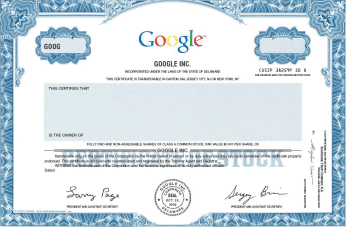
Class A shares is a term for both stocks and mutual funds. With stocks, Class A shareholders have the most rights of any shares issued by the company. So, why would an investor purchase a class a share over a common share? The short answer is that an investor or owner in the company will purchase Class A shares to retain control of the company. For example, if a company has 1,000,000 shares of common stock to issue, it can also issue 200,000 shares to the owners where the Class A shares have a voting right of 10 to 1. Therefore, while there are more common shares released to the public, the owners have a controlling interest due to the fact the Class A shares will have 2M votes. Below is a list of common rights that are associated with Class A stockholders:
- Special voting and vetoing rights
- Priority when a company liquidates assets
- The right to convert from preferred stock to common stock
The above are just some examples of special rights assigned to Class A stockholders, but the majority of companies will have additional rights and rules listed in the company’s by-laws.
Class A Mutual Fund Shares
A Class A mutual fund is a fund where a fee is paid to the fund manager upfront in order to open the account. This fee can range anywhere between 1 to 5 percent. So, if you are looking to invest $50,000 and there is a 5% fee, you will invest $47,500 and then $2,500 will be paid to the fund manager. An investor should be sure that the fund manager will be able to outperform the market over a number of years in order to recoup the initial fees. An investor should also have an investment time line of 5 – 10 years in order to truly capitalize on their investment. One of the benefits of Class A shares is that the 12-b-1 fees are waived or dramatically reduced. One of the downsides to Class A mutual funds is that the managers will take greater risks in order to produce higher returns due to the upfront fees. Class A funds also require a greater investment than a standard mutual fund. This investment requirement can range between $5,000 – $25,000. The biggest misconception with Class A shares is that the investor is paying for higher quality. The one thing to know with investing is that higher fees does not equal greater returns. So, why would someone invest in a Class A mutual fund? While the fees are high up front, as more money is invested, the fees are greatly reduced as certain breakpoints are hit. A breakpoint is certain dollar amount that is invested. For example, if a minimum investment is $25,000, the next breakpoint could be $50,000. At this point the fees associated with investing the money are reduced. An investor can actually work it out with the fund that if a large lump sum is invested the fees can be drastically reduced.
Class A Shares
Class A vs. Class B vs. Class C Shares
Share-class letters are not standardized across companies — each issuer defines them in its own by-laws. That said, a common pattern shows up often enough to be worth knowing. Class A frequently carries enhanced voting rights and is held by insiders; Class B is often the publicly traded common stock with one vote per share; and Class C, where it exists, commonly carries no voting rights at all.
The best-known example runs the other way. Alphabet lists Class A shares as GOOGL with one vote each, Class B as unlisted founder shares with ten votes each, and Class C as GOOG with no votes at all. That inversion is exactly why you should read the filing rather than assume the letter tells you what you are buying. Before you take a position in any dual-class name, check which ticker you are actually trading and what rights come with it.
What This Means for Active Traders
For day traders, voting rights are close to irrelevant — you are not holding through a proxy vote. What does matter is liquidity. In a dual-class structure, one ticker is usually far more liquid than the other, and the thinner class carries wider spreads and worse fills. The two classes can also diverge in price for stretches, so a setup you spotted on one chart may not be present on the other.
Before trading a dual-class name, check the float of the specific ticker, compare the bid-ask spread between classes, and watch relative volume on the class you intend to trade rather than the ticker that shows up in the headline.
Frequently Asked Questions
What are Class A shares?
Class A shares are a share class of common stock that typically carries enhanced rights — most often super-voting power such as 10 votes per share, priority in liquidation, and sometimes conversion rights. Companies issue them so founders and insiders can keep control while a larger number of ordinary shares trade publicly.
Are Class A shares better than common shares?
Not automatically. Class A shares usually carry more voting power, but that matters mainly to someone trying to control the company. For a trader or a passive investor, the ordinary class is often more liquid and easier to trade, which matters far more than a vote you will never cast.
What is a Class A mutual fund share?
A Class A mutual fund share charges a front-end load — a sales fee of roughly 1% to 5% deducted before your money is invested. Invest $50,000 into a fund with a 5% load and $47,500 goes to work while $2,500 goes to the sales charge.
What is a breakpoint on Class A shares?
A breakpoint is an investment threshold at which the front-end load drops. If the minimum is $25,000, the next breakpoint might be $50,000, and crossing it lowers the percentage charged. Investors who plan to add money over time can often sign a letter of intent to get the lower rate up front.
Do Class A shares always have more votes?
No. The letters are defined by each company's by-laws, not by a standard. Alphabet's Class A (GOOGL) has one vote while its unlisted Class B has ten, and Class C (GOOG) has none. Always read the filing rather than assuming the letter tells you the rights.
Related Reading on TradingSim








 Basics of Stock Trading